Palestinian presence at an international media forum on the E1 settlement project.. Mohamed Hadieh presents the legal and humanitarian dimensions of the project and its repercussions on the Palestinian people
With the participation of Mohamed Hadieh, Executive Director of the Palestinian Center for Resolution of Conflicts (ACT), as a keynote speaker, alongside an official Palestinian presence and representatives from international news agencies and media institutions, the forum of the Union of OIC News Agencies (UNA) discussed the dangers of the E1 settlement project to Jerusalem, Palestinian geography, and the future of the two-state solution.
At a time when risks associated with Israeli settlement projects—specifically the E1 settlement project east of Jerusalem—are escalating, the importance of mobilizing the international media and legal fronts has emerged to confront the repercussions of these projects and shed light on their impacts, which extend beyond land control to undermining Palestinian rights, geographic contiguity, and the future establishment of an independent Palestinian state.
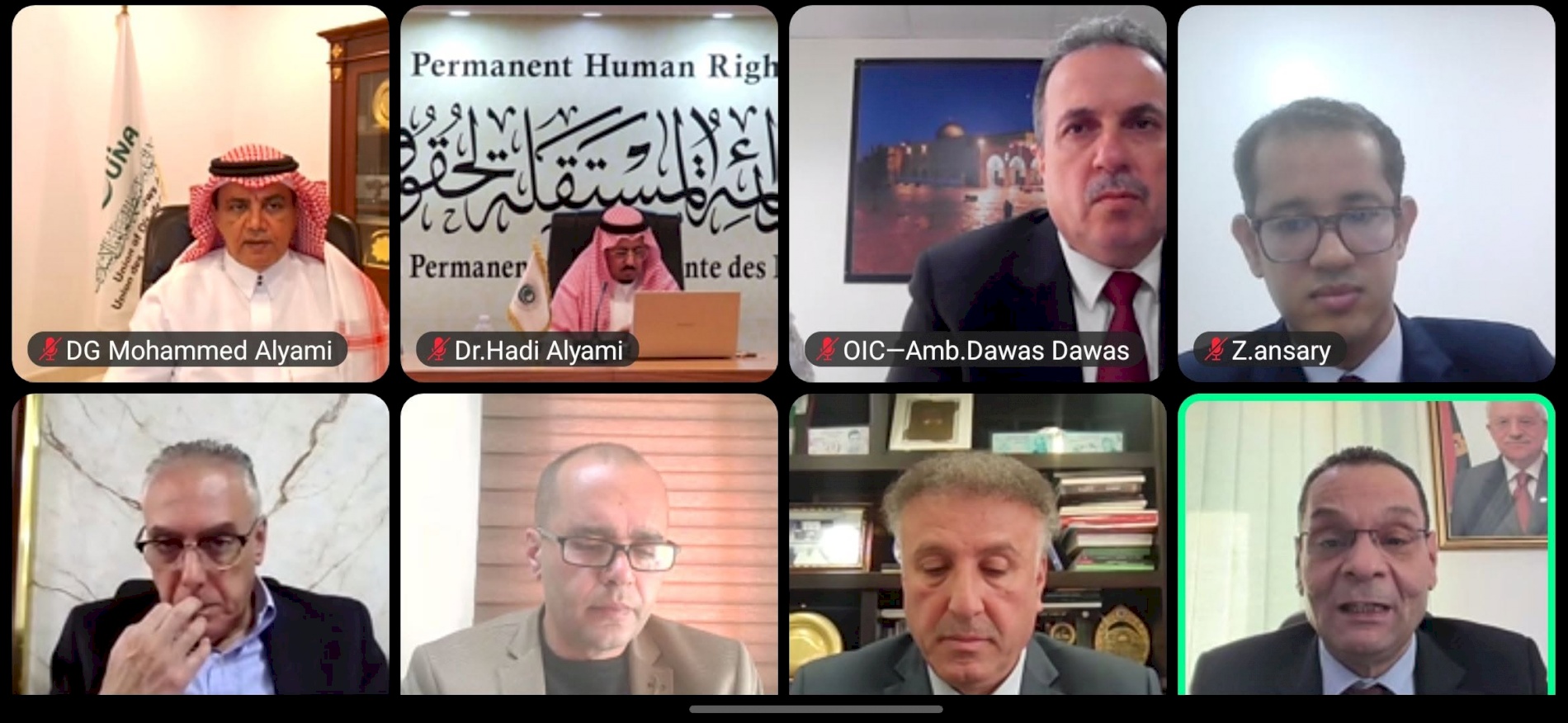
In this context, Mohammed Hadia, Executive Director of the Palestinian Center for Resolution of Conflicts (ACT), participated as a keynote speaker in the international media forum titled "The E1 Settlement Project and Jerusalem: Geographic, Humanitarian, and Legal Dimensions and Their Implications for the Two-State Solution," held virtually on November 15, 2026. The forum was organized by the Union of OIC News Agencies (UNA) in cooperation with the Permanent Mission of the State of Palestine to the Organization of Islamic Cooperation (OIC).
Hadia’s participation took place during the forum’s main session, where he presented the second theme addressing the legal and humanitarian dimensions of the E1 settlement project and its repercussions on the Palestinian people. This came during a specialized discussion examining the legal, human rights, and humanitarian implications of the project, and the importance of presenting them to international media institutions based on legal frameworks and reliable information.
Official and Institutional Palestinian Presence at the Forum The Palestinian presence at the forum was not limited to participating in discussions; it extended to organization, official representation, and the provision of specialized information, reflecting a multi-level Palestinian presence in confronting the repercussions of the settlement project.
The Permanent Mission of the State of Palestine to the OIC participated as a co-organizer of the forum, with Ambassador Hadi Shibli, Permanent Representative of the State of Palestine to the OIC, representing the Palestinian Minister of Foreign Affairs and Expatriates, Dr. Varsen Aghabekian Shahin.
Also participating was Ahmad Assaf, Minister of Information and General Supervisor of Palestinian Official Media, representing the official Palestinian media presence, alongside Amir Dawood, Director General of Documentation, Publication, and Information at the Wall and Settlement Resistance Commission, who presented the first theme on the geographic and political dimensions of the project and its repercussions on the future of the Palestinian state.
The forum also witnessed the participation of Ambassador Dr. Dwas Dwas, OIC Assistant Secretary-General for Palestine and Al-Quds Affairs, on behalf of the OIC Secretary-General, alongside Dr. Hadi bin Ali Al-Yami, Executive Director of the OIC Independent Permanent Human Rights Commission (IPHRC), as well as several officials, experts, and representatives of international news agencies and media institutions.
This presence reflects the integration of official, media, and legal Palestinian roles, alongside the institutional role of the OIC, in presenting the Palestinian cause to international media platforms and strengthening its presence in discussions related to rights and international law.
The E1 Project: A Threat Beyond Geographic Borders The danger of the E1 settlement project stems from its strategic location east of Jerusalem, and the resulting bisection of the West Bank, weakening of geographic contiguity between its north and south, and deepening of East Jerusalem's isolation from its Palestinian surroundings.
The repercussions do not stop at reshaping the geographic map; they extend to Palestinian population centers, particularly Bedouin communities threatened with displacement, along with the associated risks to the rights to housing, land, livelihoods, and stability.
During its participation in the forum, the OIC warned of the project's danger as part of a policy aimed at altering the geographic, demographic, and legal reality, and undermining the prospects of establishing an independent Palestinian state on the June 4, 1967 borders.
The organization also noted the issuance of tenders to build 3,401 settlement units and the escalation of demolition and forced displacement orders against Bedouin communities, calling on the international community to assume its responsibilities regarding these developments.
From Legal Frameworks to International Accountability The E1 settlement project represents an issue requiring legal action that goes beyond the political characterization of violations toward activating the rules of international humanitarian law, relevant United Nations resolutions, and strengthening accountability for practices targeting Palestinian land and population.
In this context, the importance of Article 49 of the Fourth Geneva Convention, UN Security Council Resolution 2334, and the Advisory Opinion of the International Court of Justice (ICJ) issued on July 19, 2024—regarding the legal consequences arising from Israel’s policies and practices in the Occupied Palestinian Territory—stands out.
These frameworks affirm the necessity of respecting the legal status of the Occupied Palestinian Territory and not recognizing illegal situations or contributing to their continuation, making the utilization of Palestinian legal expertise in international media forums essential for enhancing knowledge and accountability.
Forum Recommendations: Toward Organized Media and Legal Action The outcomes of the forum did not stop at discussion and information exchange; it issued a set of recommendations calling for enhanced cooperation and coordination among news agencies and media institutions in OIC member states to ensure that facts regarding settlement projects reach regional and international public opinion.
Among the most prominent recommendations:
Continuously monitoring field and legal developments of the E1 settlement project and keeping it prominent on the agenda of international media outlets.
Developing a comprehensive media strategy focusing on humanitarian dimensions and documenting the resilience stories of Palestinian Bedouin communities and efforts to protect them.
Utilizing maps and explanatory visual materials to illustrate the geographic location of the project and its relation to East Jerusalem and the Ma'ale Adumim settlement.
Convening a joint international conference between the OIC and the United Nations, with the participation of legal, human rights, and planning experts, to establish a time-bound action plan regarding settlements, particularly the E1 project.
Intensifying diplomatic and legal action at the United Nations and international organizations, and strengthening international alliances opposing settlement policies.
Forming an open-ended joint committee comprising participating entities and experts to monitor settlement developments and coordinate media, political, and diplomatic action.
The forum also called for establishing an international fund for the protection and legal assistance of threatened Palestinian communities, and banning trade, investment, financing, and public procurement linked to Israeli settlements.
ACT Organization: Enhancing the International Presence of Palestinian Legal Expertise The participation of ACT’s Executive Director, Mohammed Hadia, in this forum comes within the framework of involving Palestinian legal expertise in international discussions and strengthening the presence of Palestinian specialists on platforms addressing issues related to rights, international law, and the future of the Palestinian cause.
This participation underscores the importance of integration between legal, media, and human rights work, and the necessity of presenting Palestinian issues through specialized knowledge grounded in facts and legal frameworks, placing humanitarian repercussions at the heart of international debate.
The E1 settlement project is not merely a plan to expand settlements; it is an issue affecting the future of Jerusalem, Palestinian geographic contiguity, the rights of the population, and the possibility of establishing an independent Palestinian state.
Hence, the continued presence of Palestinian expertise in international forums and enhanced cooperation with media, legal, and human rights institutions are vital to keeping the Palestinian cause present and transforming knowledge and documentation into effective tools for supporting Palestinian rights and strengthening international accountability.