From Claims Management to Building More Effective Dispute Resolution Pathways: Conclusion of the Second Level of Specialized Training in FIDIC Contracts
Conclusion of the Second Level of the Specialized Training Program on Claims Management and Dispute Resolution under FIDIC Contracts
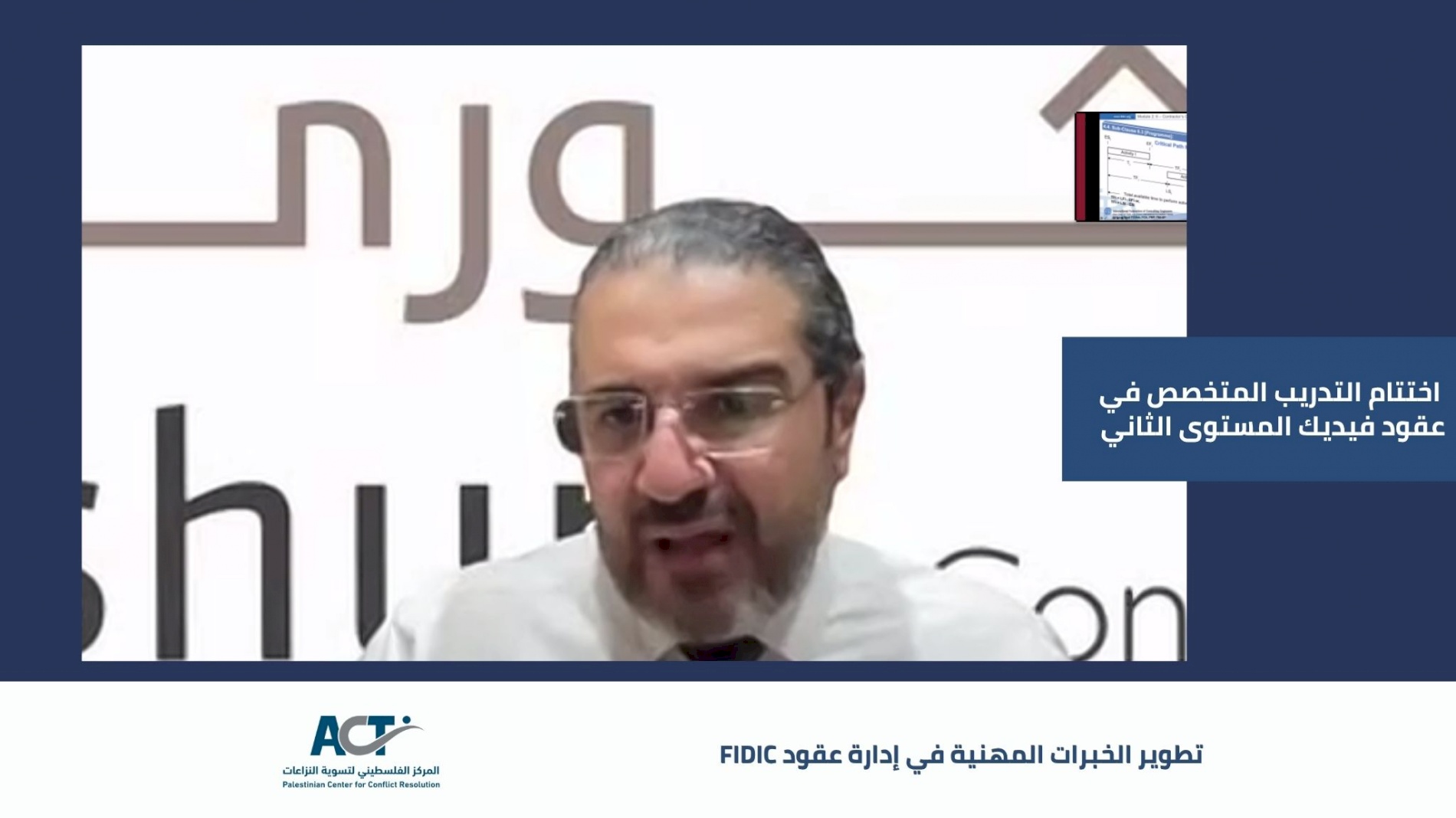
The second level of the specialized training program on claims management and dispute resolution under the contracts of the International Federation of Consulting Engineers (FIDIC) has concluded. The program was organized and executed by the ACT Palestinian Conflict Resolution Center, represented by its Chairman, Mr. Muhammad Hadieh, via the Zoom platform. It was attended by over 35 lawyers, engineers, and contractors, under the supervision and training of Dr. Hosni Madi.
This training was conducted as part of ongoing efforts to develop professional capabilities and enhance specialized knowledge among practitioners in the legal, engineering, and construction sectors. It aimed to empower participants to handle contractual claims and disputes arising during project execution, understand the rights and obligations of contract parties, and develop more efficient practices in dispute management and prevention—thereby fostering contractual justice and expanding access to professional and equitable solutions.
Training Objectives: Enhancing Knowledge and Capacity to Manage Disputes
The program focused on achieving a set of key professional objectives, most notably:
Developing participants' capabilities to analyze and evaluate contractual claims in accordance with FIDIC provisions.
Enhancing their understanding of contractual risk management and variations.
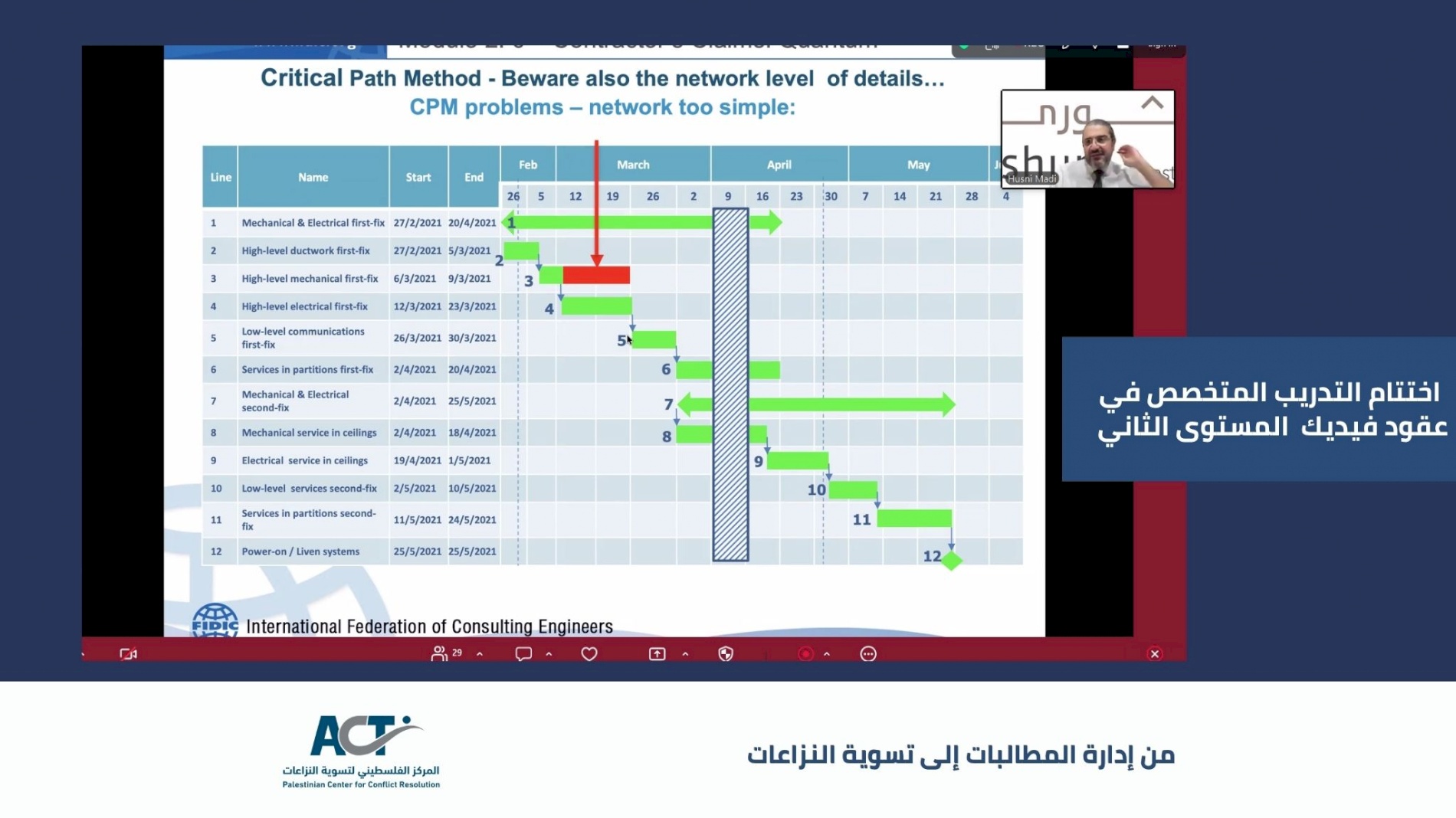
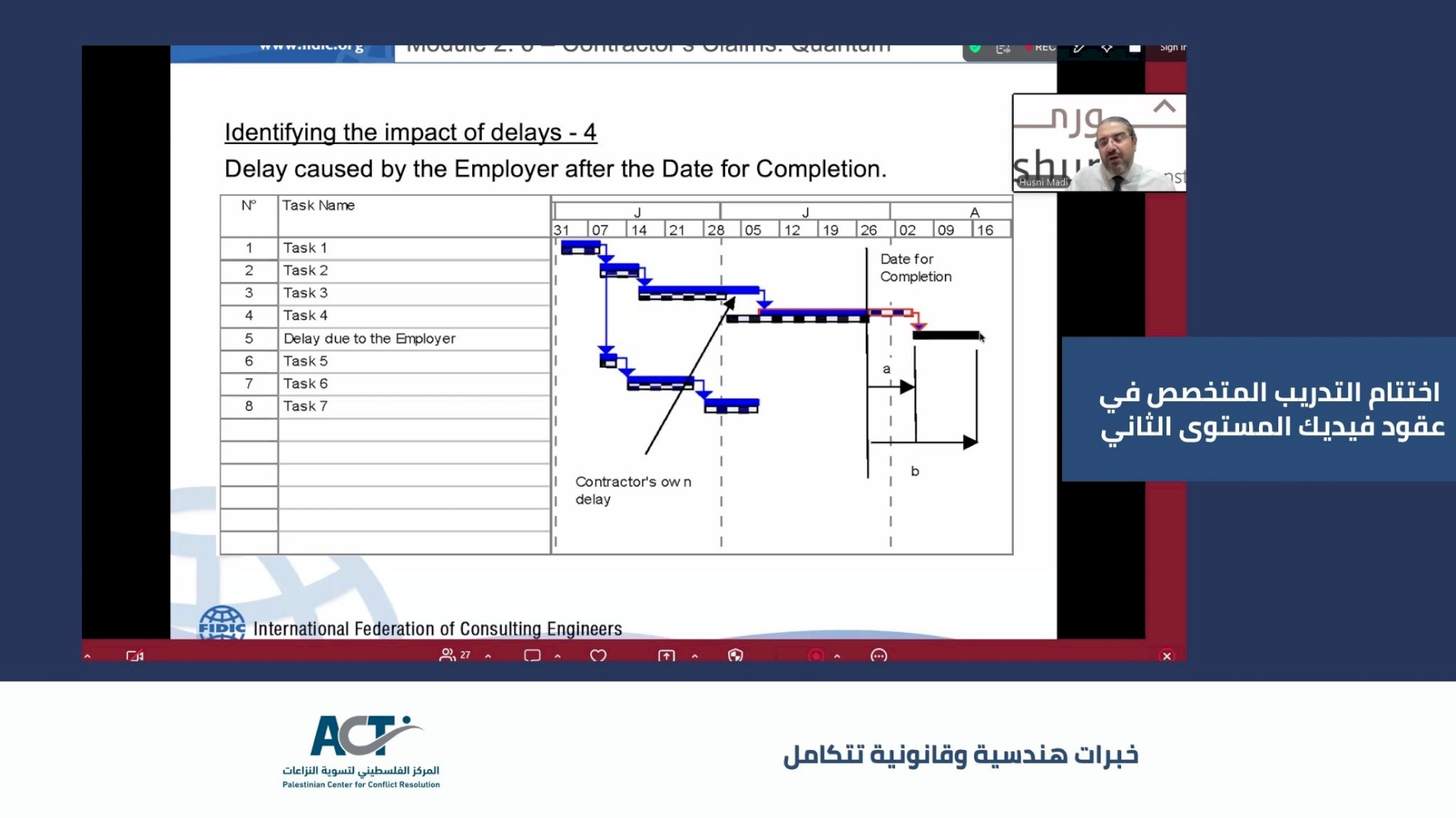
Empowering them to handle claims related to delays, extensions of time (EOT), and financial compensation.
Additionally, the training aimed to strengthen the understanding of contractual roles and responsibilities for employers, engineers, and contractors alike. It focused on building participants' skills in documenting, submitting, and reviewing claims, while introducing alternative dispute resolution (ADR) mechanisms and broadening knowledge of mediation, amicable settlement, and Dispute Adjudication Boards (DAB) as professional pathways for addressing disputes.
The curriculum covered advanced topics, including:
Managing contractual variations, risk analysis, and risk allocation among contract parties.
Notice procedures, claim submissions, and evaluation mechanisms.
Claims associated with delays, extension of time, financial compensation, and additional payments.
Suspension of work, contract termination, risk management, and Force Majeure.
Dispute Resolution: From Contractual Procedures to Alternative Solutions
Dispute resolution mechanisms formed a core pillar of the training. Participants delved into the operational procedures of Dispute Adjudication Boards (DAB)—covering board formation, member selection, dispute referral, evidence submission and review, decision issuance, enforcement mechanisms, and subsequent stages, including mediation, amicable settlement, and arbitration.
The training went beyond theoretical knowledge by incorporating practical exercises and case studies. These covered claim submissions by both contractors and employers, the engineer's role in evaluating claims, and a practical simulation of DAB dispute resolution procedures. This allowed participants to apply contractual provisions to real-world cases, analyze diverse scenarios, and learn appropriate procedures for handling them professionally.
Participants' Perspectives: Specialized Knowledge Reflected in Professional Practice
Feedback from participants reflected the high professional and practical value of the training, highlighting how it provided an opportunity to deepen their understanding of FIDIC contracts and refine the skills required to manage claims and contractual disputes from integrated legal, engineering, and managerial perspectives.
Eng. Ahmed Abu Ras described the program as a rich training experience that seamlessly combined contractual knowledge with practical applications in claims and dispute management under FIDIC contracts.
Emphasizing the importance of developing professional competencies in contract management, Dr. Eng. Amjad Ghazi Mazyad (from the Engineers Association – Gaza Center) highlighted the special significance of this training in enhancing contract management efficiency, protecting rights, and establishing contractual justice.
Eng. Amjad Maher Siam (Project Coordinator at the Palestinian Contractors Union) noted that the training offered him a deeper understanding of engineering contract management, claim analysis, risk management, and dispute resolution—strengthening his ability to make sound professional decisions and safeguard contractual rights.
Dr. Sari Waleed Abu Sharar (from University of Palestine) indicated that the training deepened his understanding of risk allocation, variation management, contractual claims, and dispute resolution mechanisms, successfully bridging technical, contractual, and financial aspects of project management.
From a legal perspective, Attorney Ibrahim Fares Bakr emphasized that the training experience transcended mere knowledge acquisition to reshape ways of thinking and approaching work with greater responsibility and awareness, reflecting the importance of bridging legal knowledge with practical applications in managing contractual disputes.
Training Outcomes: Professional Capabilities and More Effective Pathways for Justice
The training is expected to contribute to several key professional outcomes for participants, including:
Developing the capability to analyze and evaluate contractual claims using clear methodologies and FIDIC contract provisions.
Improving skills in identifying contractual risks, documenting claims, and managing variations and delays.
Enhancing the understanding of mutual rights, obligations, and responsibilities among contract parties.
Raising knowledge levels regarding DAB procedures, operational workflows, and decision-making mechanisms.
Expanding the capacity to utilize mediation, amicable settlement, and alternative mechanisms in resolving disputes.
Strengthening integration among legal, engineering, and contractual expertise to support more accurate and objective decision-making.
These outcomes are vital in empowering professionals to shift from reacting to disputes after they occur toward proactive prevention and management. This proactive approach helps safeguard contractual rights, minimize dispute-related time and costs, and foster more efficient and equitable practices in project and contract management.