ACT for Conflict Resolution concludes its participation in the project Women for Dialogue
Ramallah – ACT for Conflict Resolution concluded its participation in the implementation of the project “Women for Dialogue,” led by the Holy Land Trust, the Jerusalem Center for Women, and Tomorrow’s Women, funded by the European Union and implemented by Expertise France.
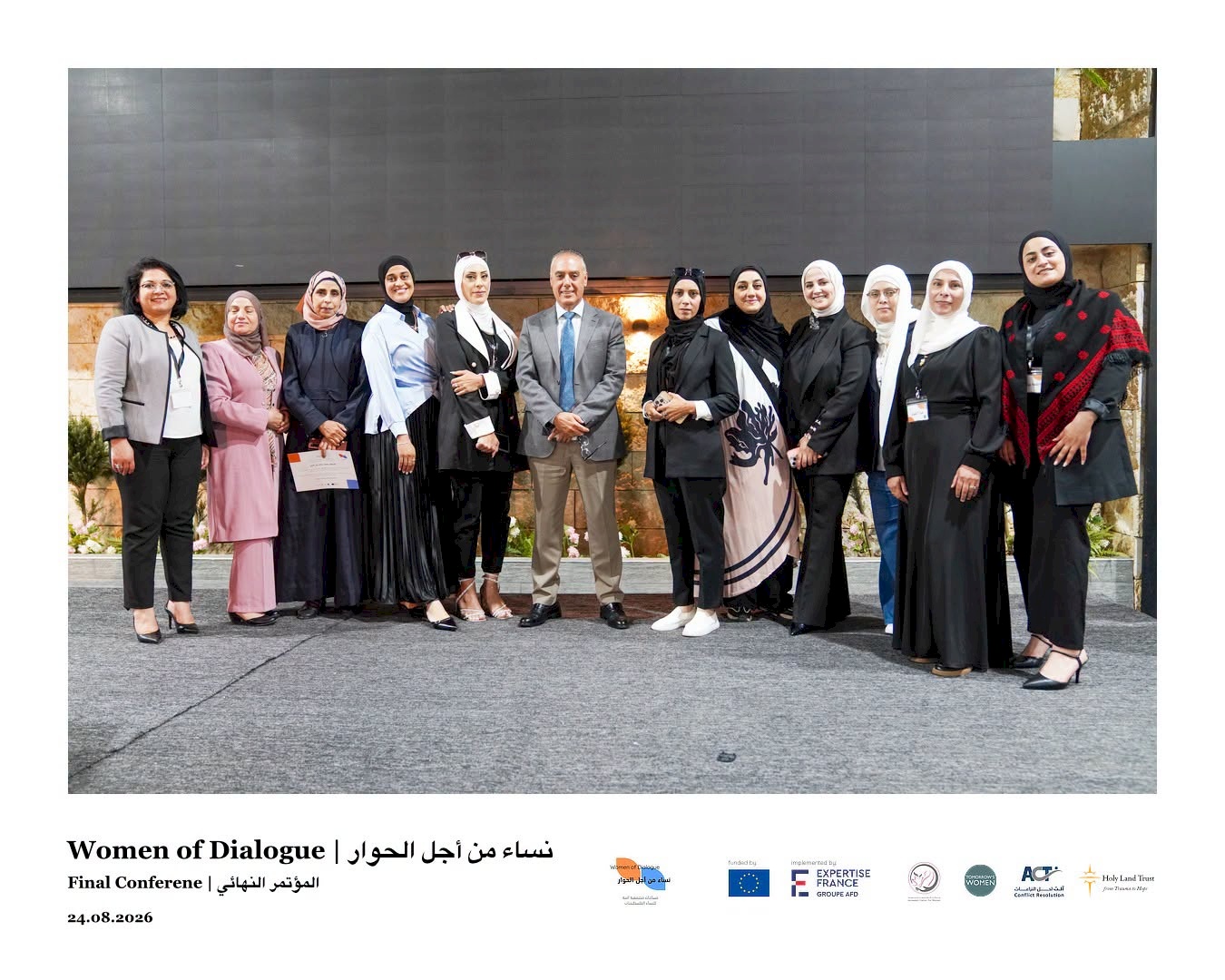
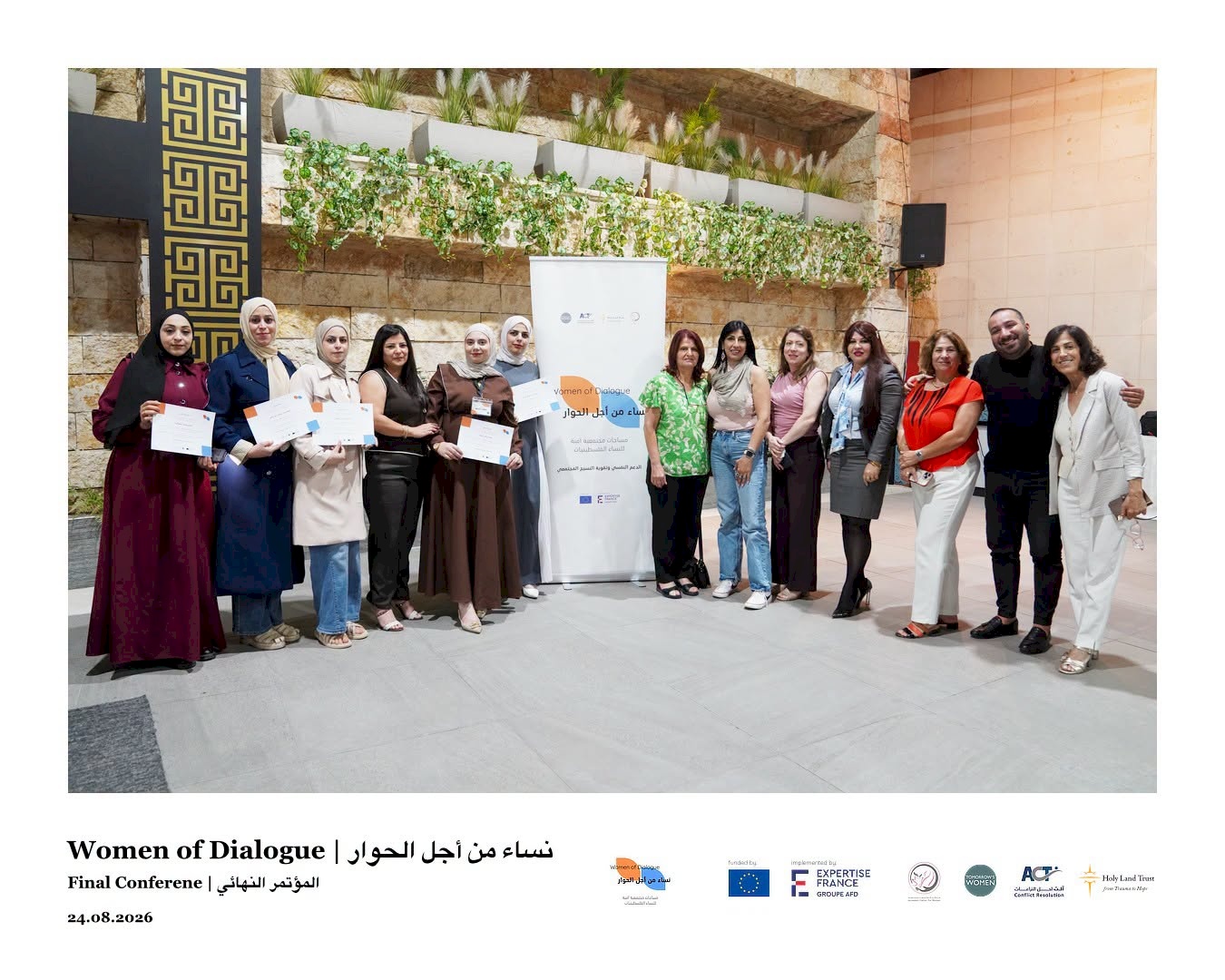
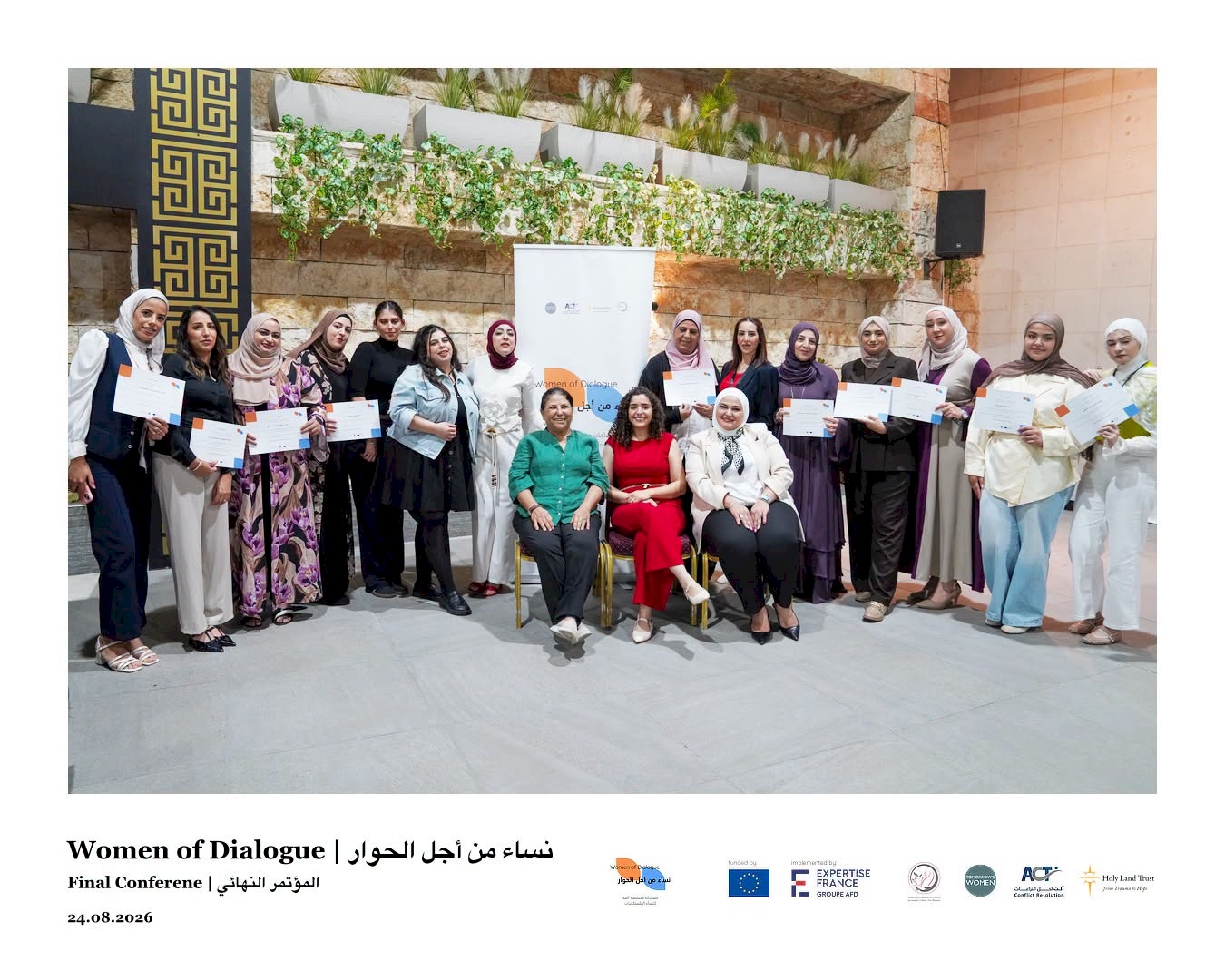
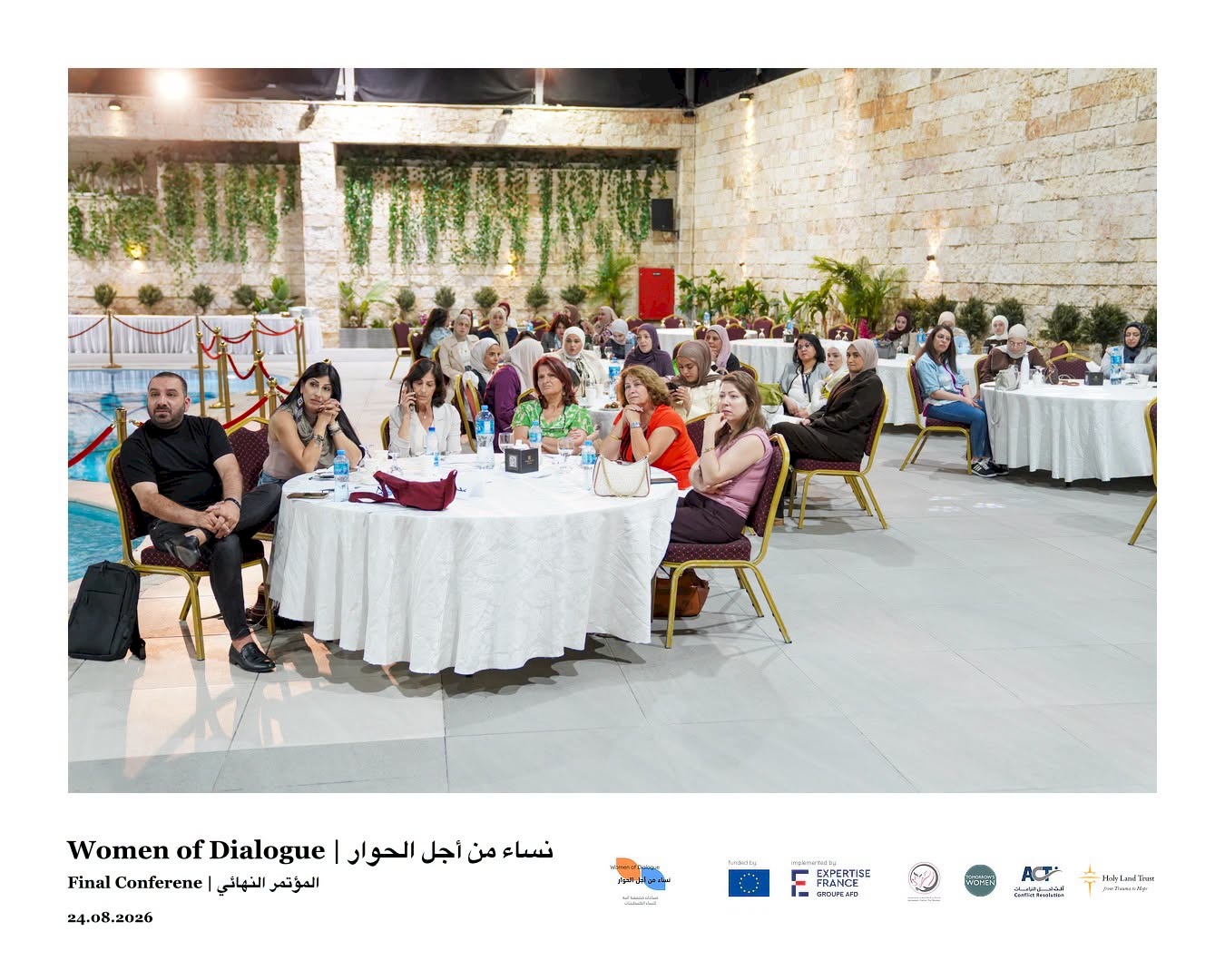
The project wrapped up with a conference held in Ramallah, bringing together the implementing institutions and participants. The conference provided a space to review the project’s key milestones, highlight the community initiatives developed by participating women, and discuss lessons learned as well as the importance of sustaining the impact achieved during the project.
From Training to Community Action
The “Women for Dialogue” project targeted 80 women from East Jerusalem, Bethlehem, and Ramallah, through a comprehensive track focused on enhancing women’s participation in dialogue, social cohesion, and community engagement. It aimed to develop a set of skills and knowledge enabling them to address challenges and conflicts in peaceful and effective ways.
The training track covered diverse topics, including leadership, empathetic listening, mediation and negotiation, trauma-informed care, and psychosocial support. These sessions strengthened participants’ ability to understand their communities and respond to their needs.
Beyond training, the project enabled participants to move from learning to action by developing community initiatives that addressed tangible issues and needs in their local contexts.
During the closing conference, participants showcased initiatives tackling a wide range of issues, including protection, economic empowerment, legal rights, digital safety, support for women and girls with disabilities, and the creation of safe spaces for women. These initiatives reflected the participants’ ability to move from identifying problems to designing practical, implementable solutions, applying the skills they had acquired throughout the project.
Building Networks of Cooperation and Solidarity
In addition to skill development, the project created opportunities for networking and exchange among participants, allowing them to share experiences and discuss challenges. This contributed to building relationships and a communication network that could serve as a foundation for further collaboration and joint action.
The participating institutions emphasized the importance of sustaining this network beyond the project’s conclusion, fostering opportunities for continued exchange and collaboration among women to further develop initiatives and create new spaces for community work.
Sustainability Begins After Training
The closing conference also featured a policy brief based on the project’s experience and lessons learned. It stressed the importance of viewing training as the beginning of an ongoing journey rather than an endpoint.
The brief highlighted the need to continue investing in the women who received training, providing follow-up, mentoring, and support to enable them to apply their knowledge and experience in developing initiatives that respond to their communities’ needs. It also underscored the importance of strengthening partnerships and sustaining the women’s solidarity network formed during the project, ensuring participants can continue exchanging expertise and building new spaces for cooperation and community engagement.