Continuing the Engineering Arbitrators Preparation Program with Specialized Sessions on Arbitral Tribunals, Procedures, and Judicial Practice in the Gaza Strip
Continuation of the Engineering Arbitrators Preparation Program with Specialized Sessions on Arbitral Tribunals, Procedures, and Judicial Practice in the Gaza Strip
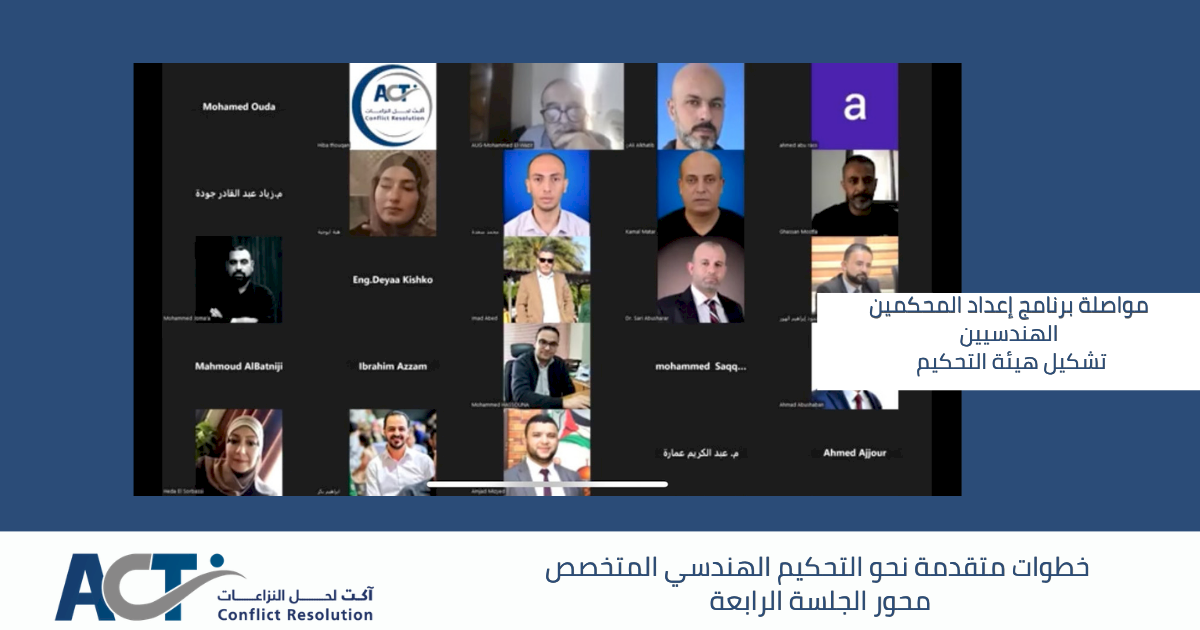
ACT Conflict Resolution Foundation continues the implementation of its specialized training program aimed at preparing and qualifying engineering arbitrators in the Gaza Strip. The program delivers a series of sessions that integrate the legal, technical, and practical dimensions of engineering arbitration, featuring active participation from a select group of engineers, lawyers, and contractors.
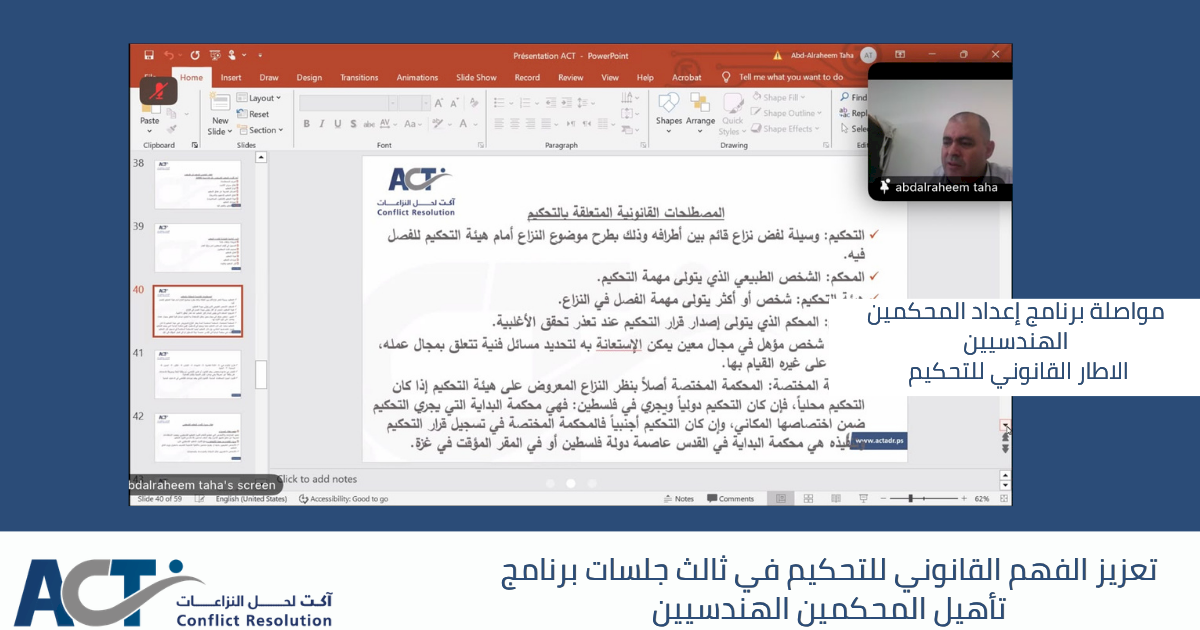
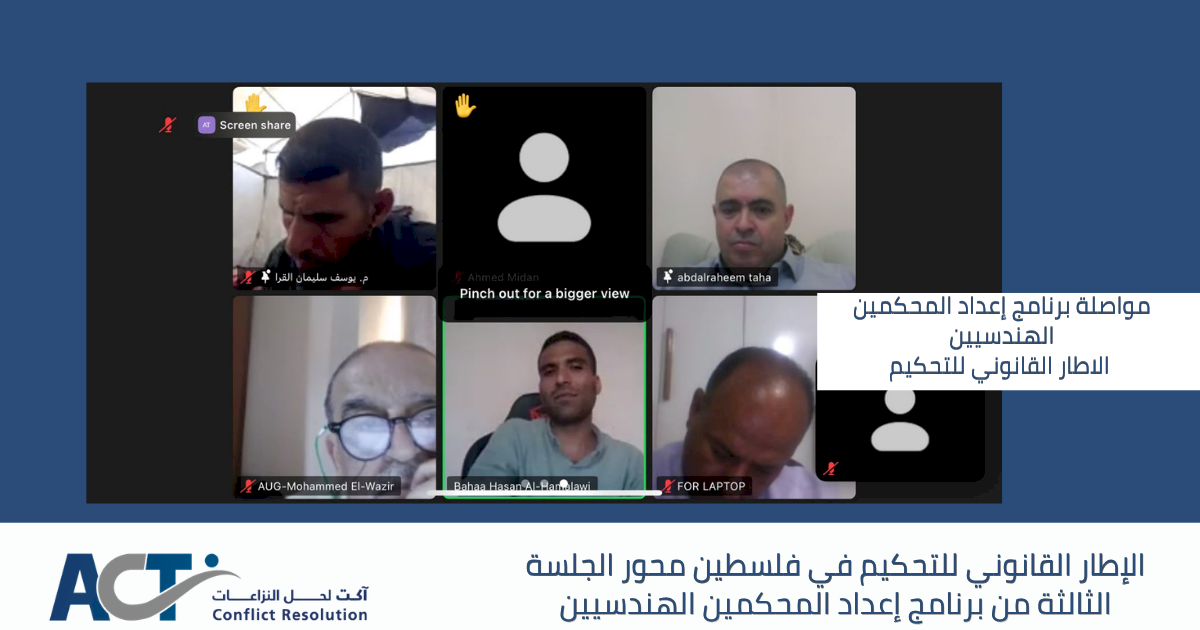
One of the key sessions addressed the theme of "The Arbitral Tribunal," focusing on tribunal formation, arbitrator eligibility, acceptance and challenge of arbitrator appointments, tribunal jurisdiction, and legal liability. Facilitated by Eng. Mohamed El-Wazir and Dr. Abdel-Rahim Taha, the session provided participants with a platform to discuss practical aspects of tribunal operations and emphasized the importance of adhering to legal and professional standards governing an arbitrator's duties.
The sessions featured interactive discussions that bridged legal and procedural concepts with practical applications, linking essential legal knowledge with technical expertise—a vital combination when handling disputes, particularly in the engineering sector.
Highlighting the importance of integrating legal and engineering fields in arbitration, Dr. Sari Abu Sharar stated:
"In my view, the true value of this program lies in integrating legal and engineering aspects rather than keeping them separate. Engineers must understand the legal frameworks governing contracts and dispute resolution, just as legal professionals need to grasp the technical nuances of engineering projects. This integration produces more competent practitioners in engineering arbitration, making legal foundations essential for effectively applying FIDIC contract principles and engineering arbitration in upcoming phases."
Addressing the current reality of the judiciary in Gaza, Dr. Mohamed Saadeh explained that only a single judicial complex is currently operational in the Strip: the Gaza Strip Court Complex in Deir al-Balah, which houses the Conciliation, First Instance, Appellate, Supreme, and Administrative Courts.
Dr. Saadeh noted that the complex is currently receiving new cases across various categories, while pre-war cases remain suspended, except for those reserved for judgment prior to the war. Decisions for these reserved cases are being issued following the re-imaging and archiving of hearing minutes using the Supreme Judicial Council's "Al-Mizan" electronic system.
Regarding damaged case files, he clarified that approximately 90% of files affected at the Palace of Justice or other courts were electronically archived in the "Al-Mizan" system, allowing for the retrieval of key data and records.
These discussions underscore the critical role of arbitration, particularly amid the extraordinary challenges facing the justice sector, along with the urgent need to build specialized capacity to manage disputes within available legal and procedural frameworks.
The Engineering Arbitrators Preparation and Qualification Program aligns with ACT Conflict Resolution Foundation’s ongoing efforts to advance alternative dispute resolution (ADR) and empower specialized professionals with combined legal and technical expertise, thereby supporting access to justice and elevating professional practices in engineering arbitration across the Gaza Strip.