.ACT Foundation announces the work plan of the Advisory Committee for Engineering Arbitration to support reconstruction efforts in the Gaza Strip
ACT Foundation for Dispute Resolution Announces Work Plan of the Advisory Committee on Engineering Arbitration for Reconstruction Efforts in Gaza
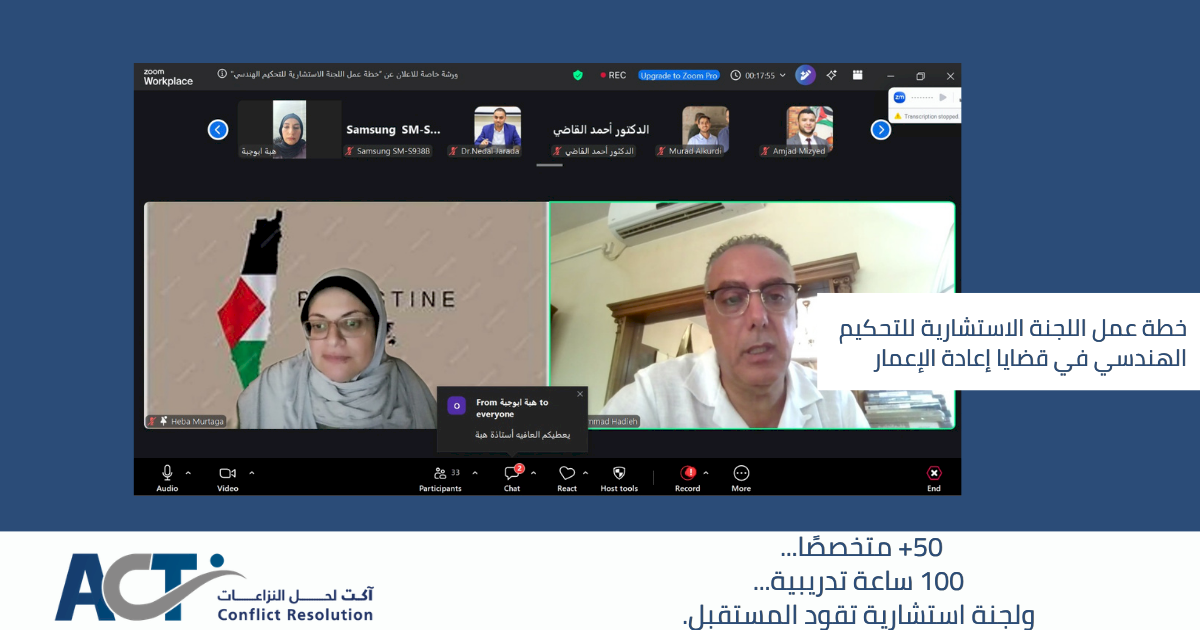
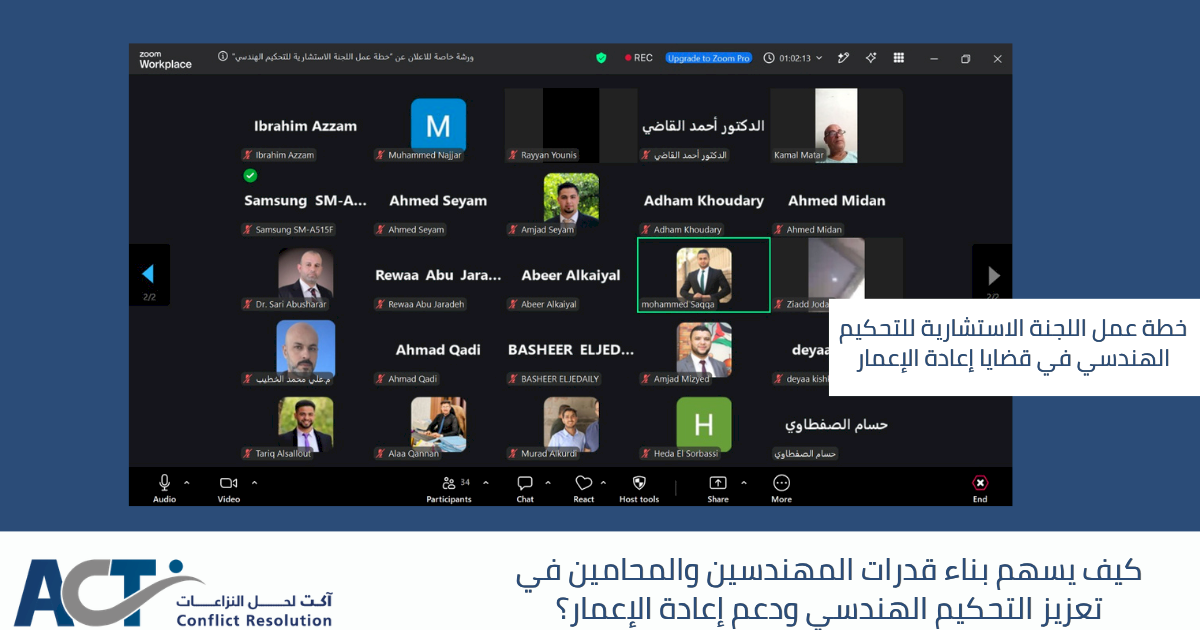
ACT Foundation for Dispute Resolution has announced the work plan of the Advisory Committee on Engineering Arbitration in reconstruction cases, during a workshop held via Zoom with the participation of committee members, alongside a distinguished group of lawyers, engineers, and contractors targeted in capacity‑building programs in the Gaza Strip. The committee aims to provide technical and legal references that contribute to developing engineering arbitration practices and enhancing the readiness of professionals to address disputes arising during the reconstruction phase.
The workshop opened with remarks by Mr. Mohamed Hadia, Chairman of ACT Foundation for Dispute Resolution, who emphasized the importance of advancing alternative justice mechanisms and strengthening engineering arbitration as an effective tool for resolving disputes linked to reconstruction, thereby supporting the rule of law and protecting the rights of all parties. Mr. Hadia stated: “Reconstruction is not limited to rebuilding infrastructure; it also requires a justice system capable of managing disputes efficiently and fairly. Through this initiative, we seek to promote engineering arbitration as a practical tool that safeguards rights.”
Engineer Zuheir Medoukh, Chairman of the Advisory Committee on Engineering Arbitration, stressed the pivotal role the committee will play in developing professional practices and fostering collaboration between legal and engineering expertise.
During the workshop, the committee’s work plan was presented, outlining its vision, strategic objectives, organizational structure, implementation timeline, and expected outcomes. These include specialized capacity‑building in engineering arbitration aligned with international standards, preparation of specialized research references, strengthening professional partnerships, and supporting community initiatives in dispute resolution.
The session featured interactive discussions among participants on mechanisms for implementing the training program, criteria for participant selection, opportunities for professional accreditation, and the importance of engineering arbitration in expediting the resolution of contractual disputes related to reconstruction. Such efforts are expected to positively impact project continuity and build trust among owners, contractors, consultants, and stakeholders.
Participants affirmed that launching the committee’s work plan represents a significant step toward establishing a national framework specialized in engineering arbitration, contributing to professional capacity development, expanding the use of alternative justice mechanisms, and supporting recovery and reconstruction efforts through more efficient and sustainable solutions.
This workshop forms part of broader efforts to enhance access to justice and reinforce the rule of law by developing specialized mechanisms for dispute resolution that respond to community needs and contribute to recovery and reconstruction in the Gaza Strip.