?From Declaration to Action: How Do We Protect Religion from Being Used to Promote Hate
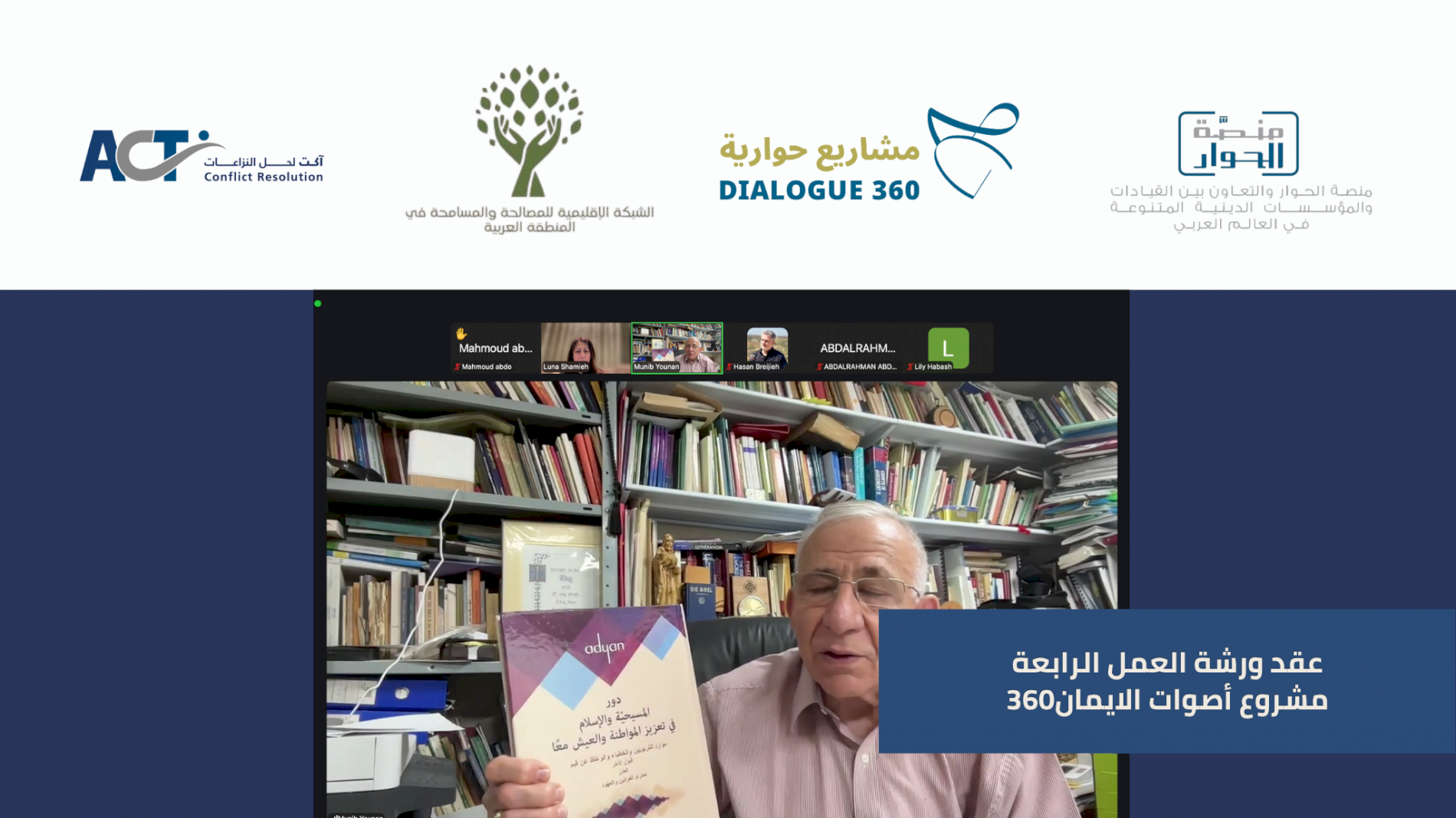
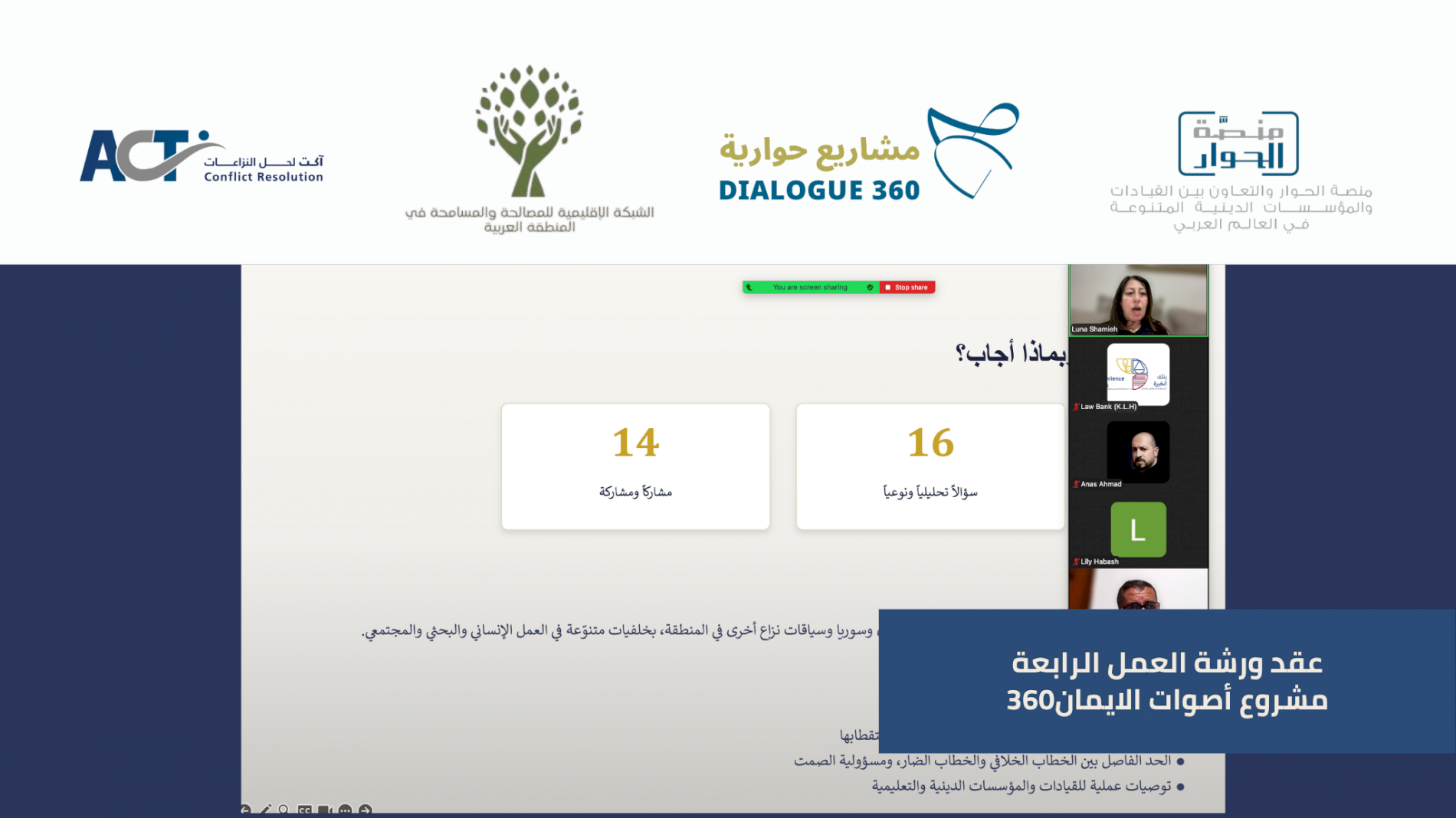
As part of the Faith Voices 360 project, the fourth session was held as a space for in-depth dialogue, moving beyond analyzing religious hate speech to exploring practical actions for addressing it.
The Faith Voices 360 project is implemented by ACT for Conflict Resolution, in partnership with the Regional Network for Reconciliation and Forgiveness, and in collaboration with the King Abdullah bin Abdulaziz International Centre for Interreligious and Intercultural Dialogue (KAICIID).
Participants discussed key issues related to the civil state, equal citizenship, education, the role of religious institutions, and the responsibility of intellectuals and community leaders in confronting discourse that exploits religion to justify exclusion or division.
The discussion emphasized that the goal is not to remove religion from society, but to prevent its political or social exploitation against others. Religion can be a moral and spiritual force that promotes justice and compassion, provided it is not used to monopolize truth, citizenship, or the state.
Participants also stressed that preventing hate speech begins with education, the family, and schools. Hatred does not emerge overnight; it can be shaped by the very first words a child hears about those who are different. The dialogue further highlighted that language is not merely a means of expression—it is a powerful tool that shapes awareness and human relationships. True coexistence, participants agreed, is not about changing others, but about rejecting hostility and exclusion.
The session concluded by emphasizing the importance of transforming the final ethical declaration into a practical advocacy and action plan, including awareness sessions, a code of conduct for religious leaders, curriculum reviews, and partnerships with religious and civil society institutions, ensuring that its impact reaches communities rather than remaining a theoretical or elite document.
Faith Voices 360 continues to create a regional space for dialogue, affirming that in times of crisis, religion can serve as a bridge to dignity, citizenship, and trust—not as a tool for fear or exclusion.