Second Workshop of the Faith Voices 360 Project: Religion, Polarization, and Analyzing Religious Narratives in Times of Crisis
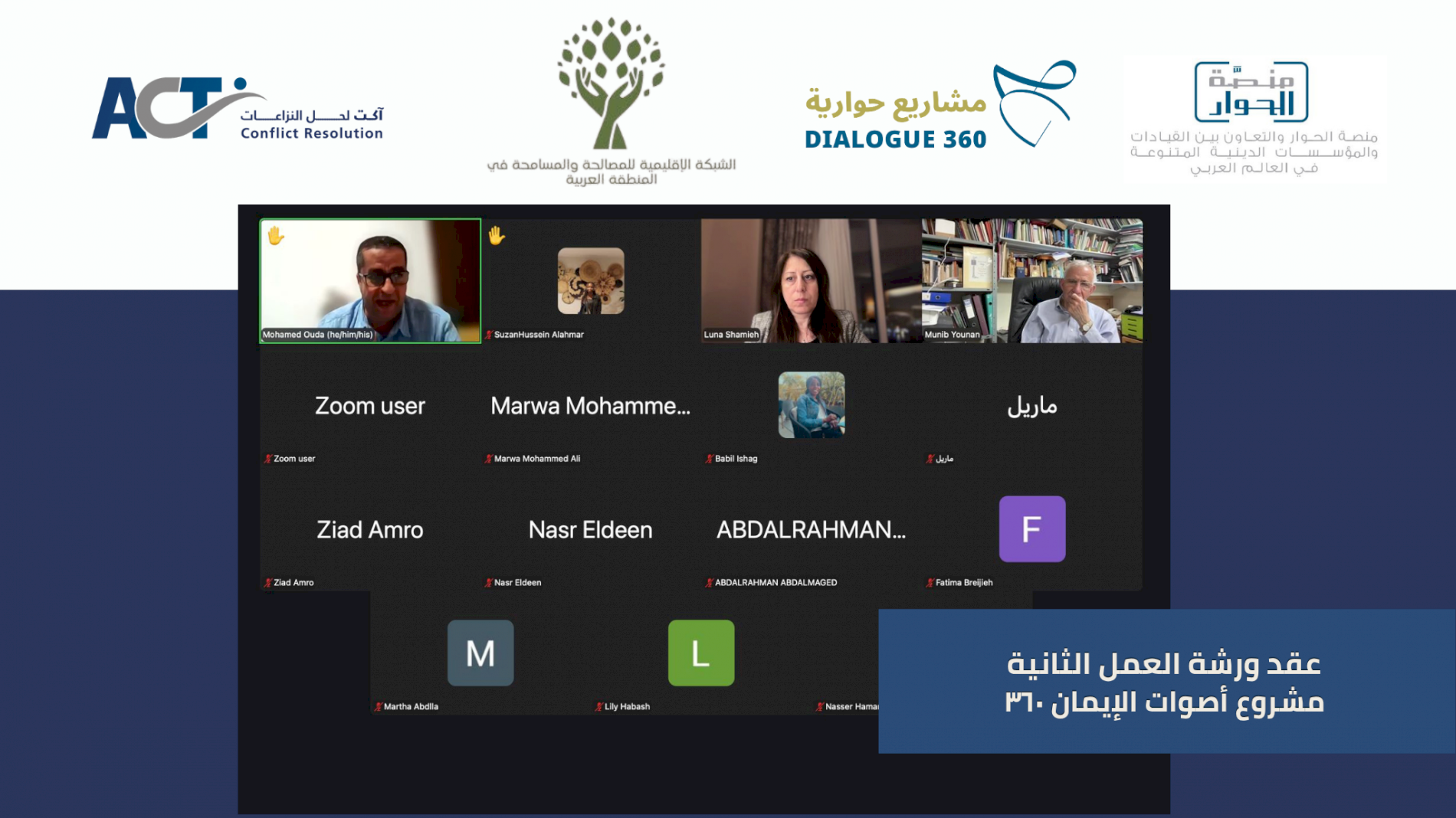
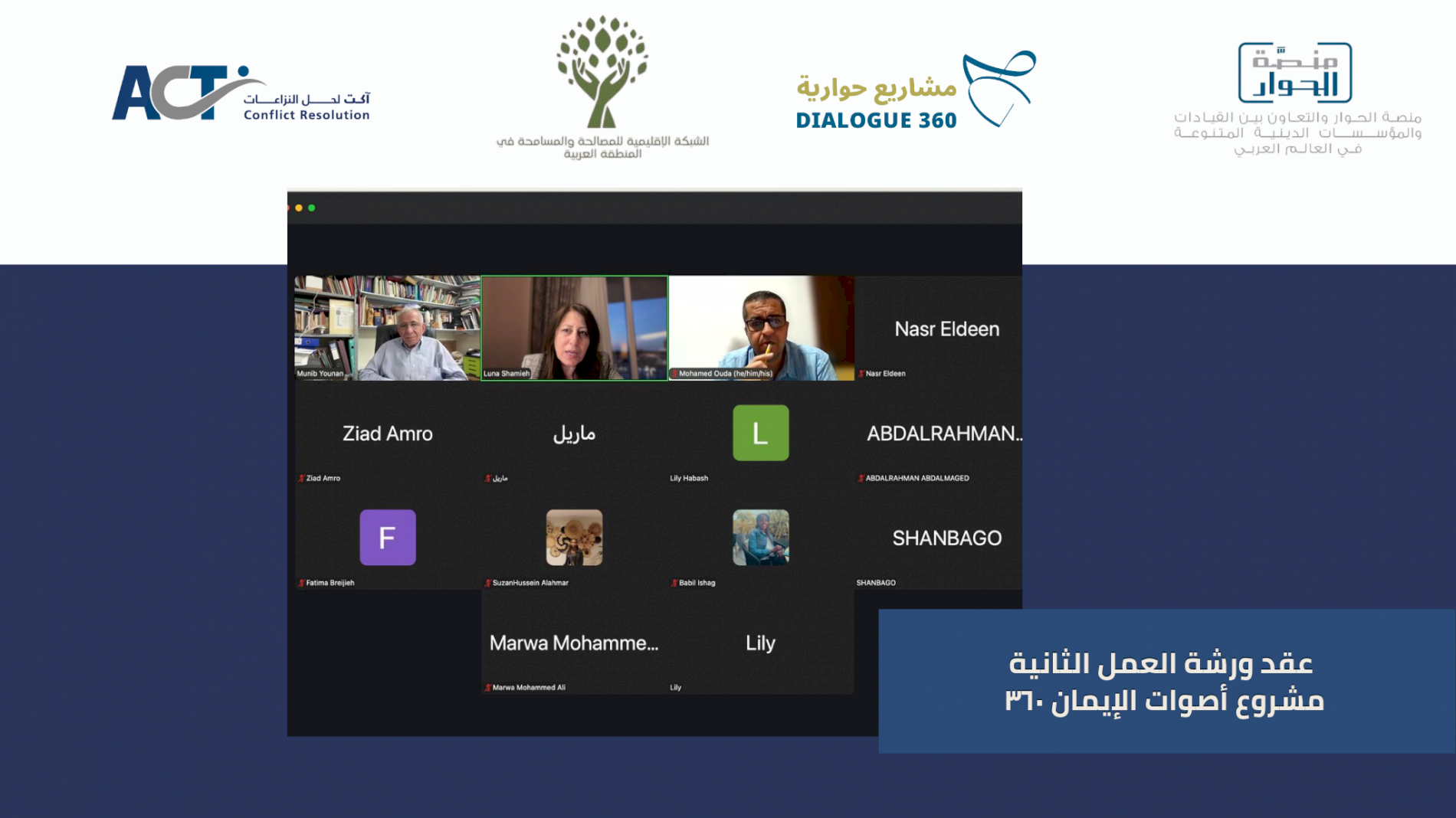
The second workshop of the Faith Voices 360 project, titled "Religion and Polarization: Analyzing Religious Narratives in Times of Crisis," was held with the participation of 32 religious and community actors, including 18 men and 14 women.
The Faith Voices 360 project is implemented by ACT for Conflict Resolution, in partnership with the Regional Network for Reconciliation and Forgiveness, and in cooperation with the King Abdullah Bin Abdulaziz International Centre for Interreligious and Intercultural Dialogue (KAICIID).
The workshop focused on exploring the relationship between religion and polarization in times of crisis, examining how religious narratives are formed and how they can sometimes be used as tools for mobilization, exclusion, or the justification of symbolic and social violence. At the same time, participants explored how these narratives can serve as sources of meaning, resilience, trust-building, and the promotion of tolerance and human dignity.
The discussions were rich and highly interactive, with participants sharing real-life examples from their own contexts. These examples were analyzed using the framework introduced during the workshop, which examined the context, the speaker, the intended audience, the content, the symbols employed, the construction of "us" and "them," and the potential impact of narratives on either trust-building or polarization.
One of the central themes was the distinction between religion as a system of faith and ethics and the ways religion may be instrumentalized by political, social, or religious actors. One participant reflected:
"Is the problem with religion itself, with religious leaders, or with those who interpret religion?"
Participants also discussed the risks of transforming religion into a tool for mobilization, particularly when political and social interests become intertwined with religious narratives. As one participant noted:
"When interests shape religious narratives, they change their function, turning them from a source of meaning into a tool of polarization."
The workshop further examined the influential role of religious platforms and leaders, emphasizing the responsibility that comes with their social influence. One participant observed:
"A priest or a sheikh can easily mobilize people if their discourse is not responsible and sensitive to the context."
Participants stressed the importance of using the concept of narratives, rather than simply discourse, recognizing that narratives extend beyond words to encompass the broader stories constructed around identity, the self and the other, victims and perpetrators, danger and protection, and concepts of right and wrong. As one participant summarized:
"We use the concept of narrative, not just discourse, because narratives reveal how meanings are constructed and how they influence people."
The discussions also highlighted the need to humanize public discourse by moving beyond language that dehumanizes or reduces others to stereotypes. Participants explored how more inclusive narratives can foster tolerance, mutual recognition, and respect. A key question raised during the workshop was:
"How can we humanize discourse in order to promote a discourse of tolerance?"
Another important theme was the relationship between faith and human rights. Participants emphasized that a discourse centered on human dignity can help bridge religious differences by focusing on every person's right to safety, respect, and freedom from discrimination.
The workshop also addressed the risks of removing religious texts from their historical and social contexts and treating historical heritage as unquestionable.