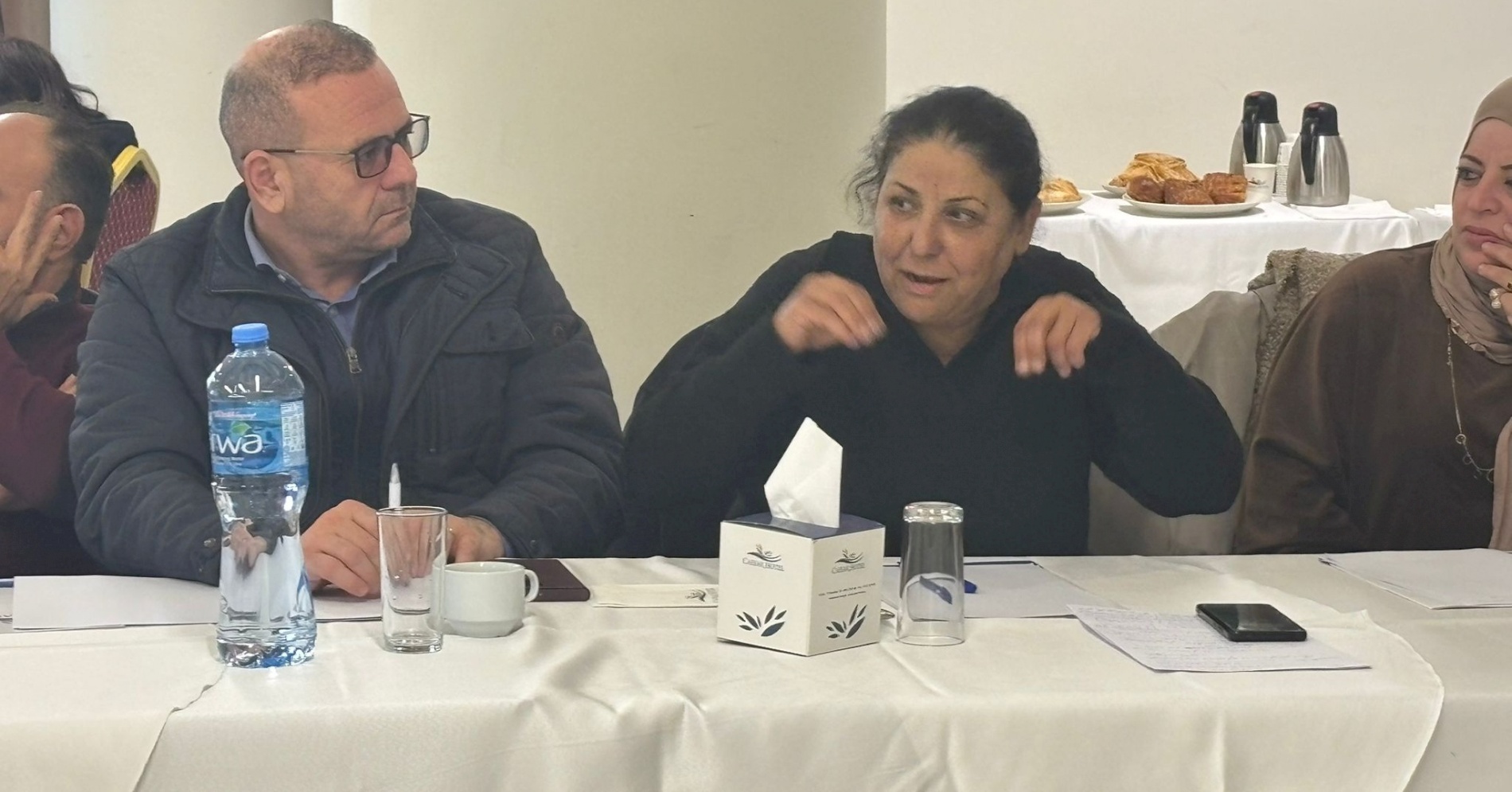
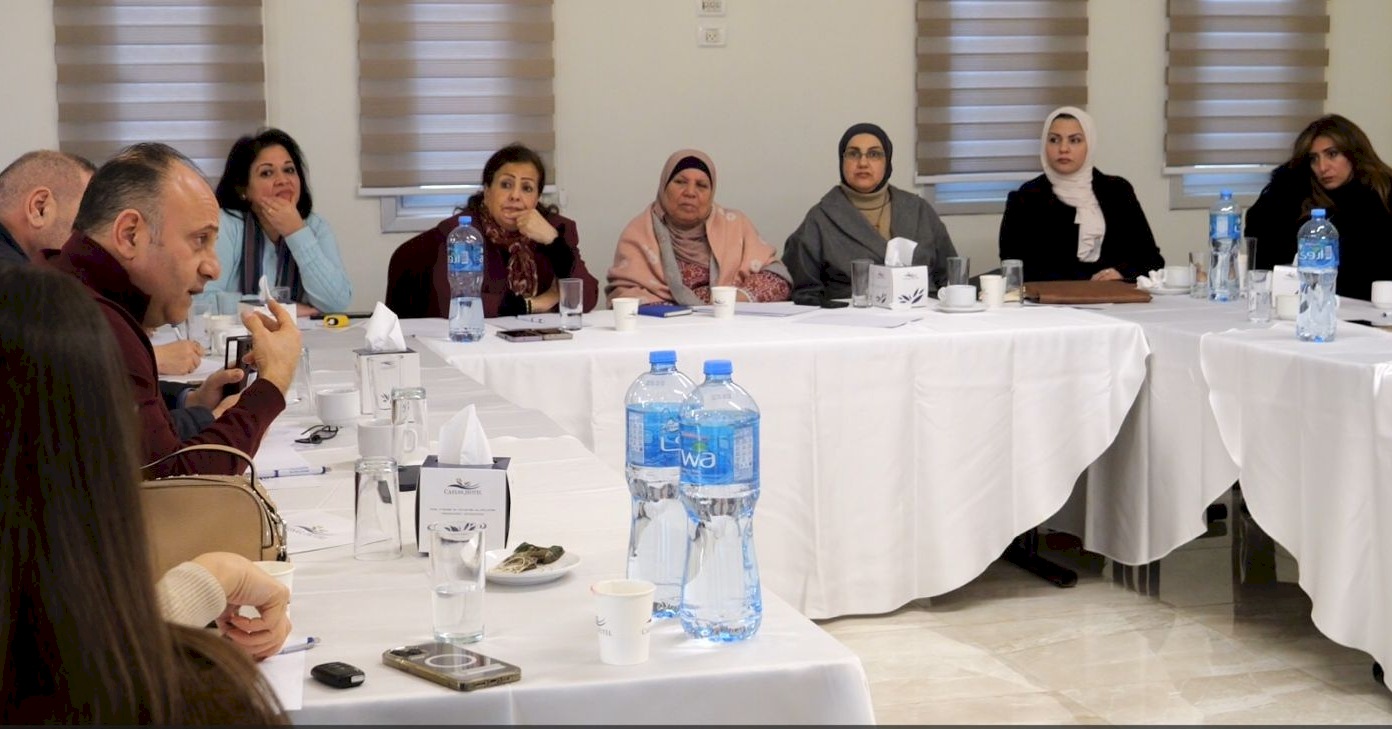
ACT Holds Discussion Workshop on Lessons Learned from Palestinian Negotiation Experiences from a Feminist Justice Perspective
On Monday, 19 January 2026, ACT for Conflict Resolution held a specialized discussion workshop to examine an in-depth study on previous Palestinian negotiation experiences—both official and unofficial—from the perspective of justice and feminist participation. The workshop brought together academics, activists, representatives of civil society organizations, and experts in politics, human rights, and peacebuilding.
The workshop was based on a study prepared by researcher Waad Qannam, which offered a critical feminist analytical reading of formal and informal Palestinian negotiation tracks, as well as international advocacy pathways. The study aimed to deconstruct patterns of structural gender exclusion and to examine their implications for justice and for the Palestinian negotiating position more broadly.
The study highlighted several key findings, including that the exclusion of women from formal negotiation processes is not an incidental occurrence, but rather a recurring structural pattern embedded within political decision-making systems. It further showed that while women’s participation in informal negotiation tracks has been relatively broader, it has often remained politically non-binding and, at times, functioned as a form of symbolic inclusion that does not translate into genuine influence over decision-making.
In contrast, the study found that international advocacy has provided a space more aligned with Palestinian feminist justice, where women have played leading roles in building international legitimacy, shaping political and moral narratives, and strengthening the symbolic and political leverage of the Palestinian cause.
The workshop created a rich and interactive dialogue space, where participants emphasized that empowering women within negotiation processes must be part of a broader vision for redistributing power and advancing justice across the political process as a whole. Participants stressed that any negotiation process lacking genuine and balanced participation, and disconnected from principles of liberation and legal legitimacy, will remain incapable of achieving a just and sustainable peace.
This workshop was conducted as part of the project “Empowering Women as Peacebuilders: Negotiation, Mediation, and Dialogue,” implemented by ACT for Conflict Resolution, with the aim of strengthening women’s roles as key actors in just and sustainable peace processes and political decision-making, while engaging a wide range of societal stakeholders.
The workshop was implemented within the framework of the Two-State Solution Coalition, and its content remains the sole responsibility of ACT for Conflict Resolution.