Under the umbrella of ACT, two researchers make an academic achievement and elevate it from research study to a national human duty.
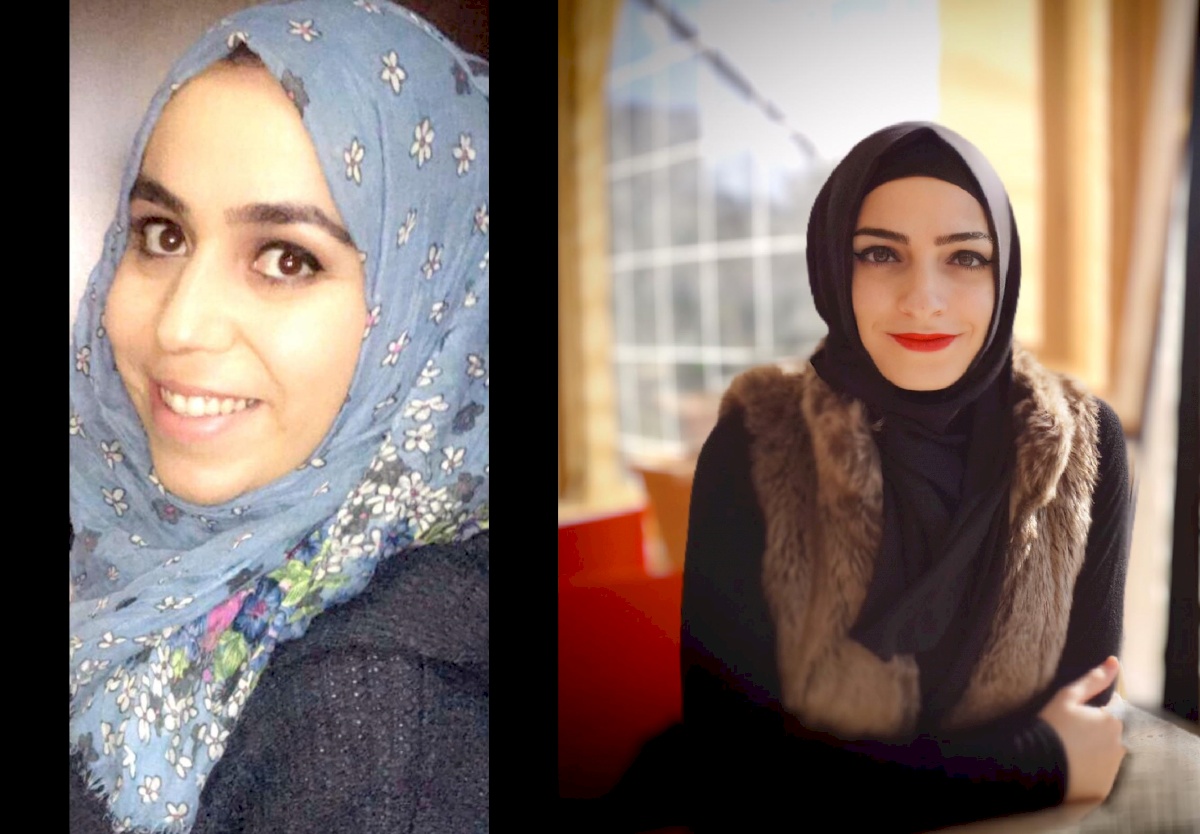
Love for one’s work and the fruits of their labour is even more meaningful when it is dedicated to one's homeland, inspiring everyone involved into throwing themselves into tiniest detail to ensure its quality. For the sake of the land and Jerusalem, the work on the project "Strengthening Al-Faisal Center for Mediation and Arbitration” as the first center specialized in alternative dispute resolution in the city since its occupation in 1967. As part of the project, which was launched in 2019 under the umbrella of ACT for Alternative Dispute Resolution & Studies and with the support from the Arab Monetary Fund, of The Islamic Development bank management, and the United Nations Development Program (UNDP), a broad effort was devoted to the issuance of a research paper titled: "Arbitration in the cases of marital dispute in Sharia Courts in Jerusalem". This is where the story of the two lawyers, Malake Abd al-Latif and Wafaa Darwish, began.
The lack of similar studies focusing on Jerusalem, its focus on the most important issues affecting the family as the main component of society, along with its relation to Sharia courts in the capital that has a special place for every Palestinian, were the driving factors that led researchers Abdel Latif and Darwish to become interested in the topic after it was announced by ACT.
Researcher and lawyer Darwish said: "Despite the difficulties we faced, including my inability to reach Jerusalem without a permit in general, and during the COVID-19 pandemic in particular, there was wonderful cooperation with my colleague Ms. Malakahand and ACT’s team, particularly Mr. Mohammad Hadia. We used various methods of electronic communication to contact stakeholders, and we managed to complete the study in record time in reference to the plan that we had initially prepared.”
From the very beginning of this endeavour, the study’s themes inspired both researchers until they felt that its completion was a national and human duty. This made them feel it was imperative to give it their all.
On her part, lawyer and researcher Abd Al-Latif said: “It didn't feel like we were only responsible for handing in a study within an allotted timeframe. The responsibility felt more like a social and human obligation. It became clear after meeting with disputing parties as they shared not only their cases, but their experiences and the injustice that they faced, emphasizing the importance of changing the status quo to ensure that no one else is wronged as they were”.
Darwish followed up: "Through the study we were surprised how little people knew about dispute resolution mechanisms, and how disorganizing and lacking the legislative framework governing arbitration was. The very existence of arbitrators, specifically female arbitrators, is rejected. This is why we felt we had to bring attention to the issue and prepare a study that reflected this reality.
After listening to many experiences and interviewing arbitrators who tried to present an ideal image [of their work], contrasted with the difficult experiences of families who had been wronged as a result of arbitrator’s lack of qualifications and capacities, the researchers reached an important conclusion that arbitrators' lack of professional capacities led them to exacerbate marital disputes and play a negative, counterproductive role, wasting several opportunities to save entire families from falling apart. Darwish said: "Hearing about these cases affected us directly, especially as we are wives and mothers and are able to understand that the family and the household are the most important thing. So, when we start talking about arbitration, we really want it to be a supportive tool for them and not against them."
The researchers considered the study the cornerstone of any new studies that might follow on the issue of arbitration in marital disputes, as each of the points addressed could constitute an entire study in itself. It could lead to a series of studies that shed light on an important topic that affects the fabric of society and its connectedness, in addition to being an important reference for researchers, arbitrators, lawyers and judges.
On the recommendations, Abdel Latif concluded: "What we would like to see in Sharia arbitration is a clear mechanism for how arbitrators are appointed, and a clear delineation of the required qualifications–which would solve many of the usual factors that cause problems in the arbitration process. For example, when the arbitrator is also the lawyer representing one of the parties, or a relative of one of the parties. By including these mechanism, we can be sure that arbitrators truly did their job to the fullest whether by reconciling the parties or by recommending divorce. "
In addition to this recommendation, the researchers came out with several other points of focus, including the necessity of holding training sessions for arbitrators to deal with marital disputes, unifying the laws applied in Sharia courts in Jerusalem, the West Bank, and Gaza Strip, and creating a family counseling and reform department in Sharia courts in Jerusalem, establishing a union for Sharia attorneys which would play a role in ensuring that any behavior inconsistent with the ethics of the profession is remedied, and that the decisions of arbitrators are not challenged except in specific cases.
Prior to publishing, the two researchers presented the second draft in an online workshop that included a rich discussion and valuable feedback from a variety of aspects, including psychological, social and legal aspects that revolve around the topic of the study by a group of researchers, jurists, arbitrators, psychosocial experts and a large number of participants from different backgrounds.
The study was issued within the project “Strengthening Al-Faisal Center for Mediation and Arbitration” implemented by ACT for ADR & Studies, funded by the Arab Monetary Fund, the Islamic Development Bank and the United Nations Development Program.