Launching a specialized program for preparing and qualifying arbitrators in engineering arbitration in the Gaza Strip
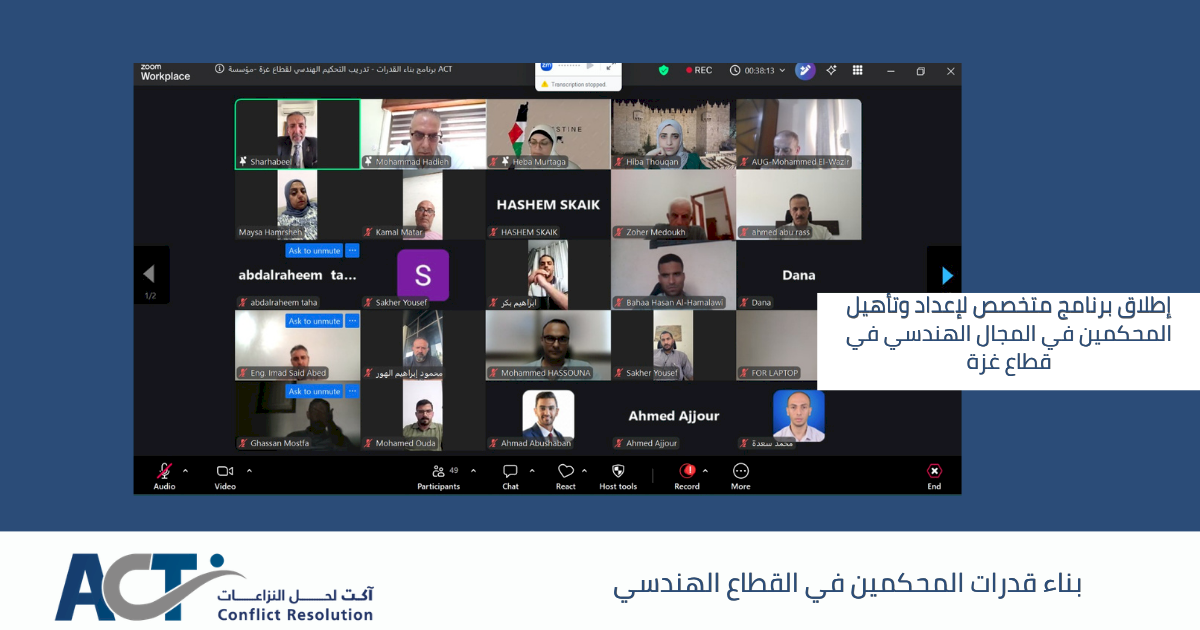
ACT Foundation for Conflict Resolution launched a specialized training program to prepare and qualify arbitrators in the field of engineering arbitration in the Gaza Strip. The program aims to promote the use of alternative dispute resolution methods and to build national capacities capable of managing engineering disputes efficiently.
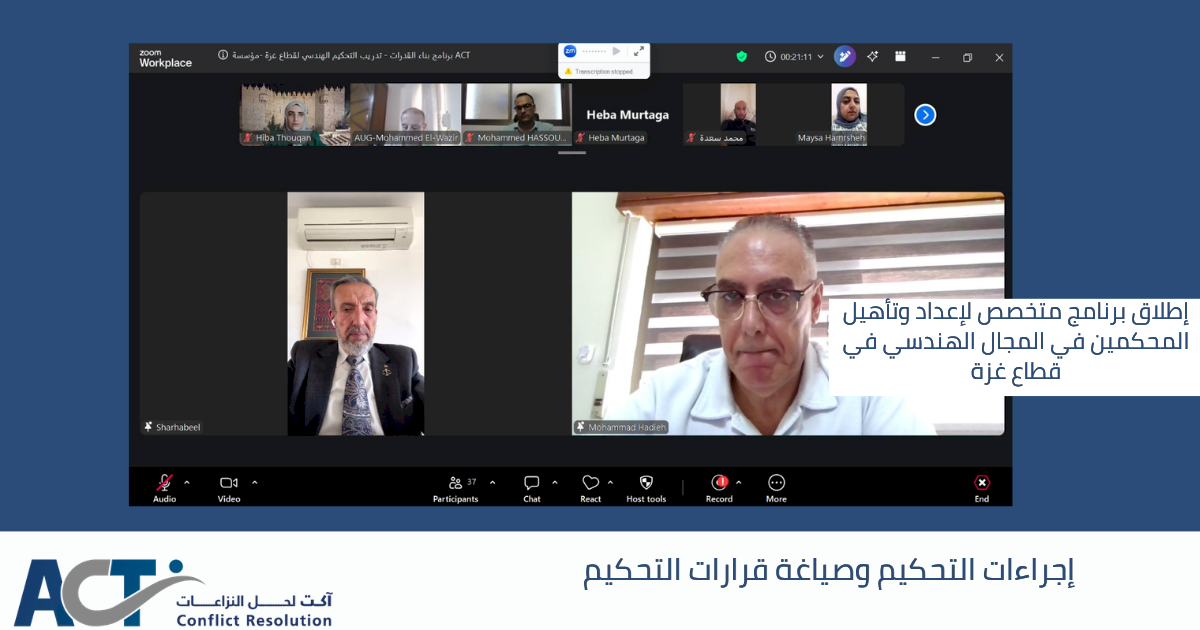
The opening session was attended by H.E. Minister of Justice, Counselor Sharhabeel Al‑Zaeem, and Mr. Mohammed Hadiya, Chairman of the Board of ACT Foundation for Conflict Resolution, along with a distinguished group of engineers, lawyers, contractors, and other partners participating in the program.
In his speech, H.E. Minister of Justice Sharhabeel Al‑Zaeem emphasized the importance of developing the arbitration system in Palestine, particularly in the engineering sector, as an effective means to accelerate dispute resolution and strengthen confidence in alternative methods. He noted that qualifying specialized arbitrators contributes to supporting reconstruction efforts and reinforcing the rule of law.
For his part, Mr. Mohammed Hadiya, Chairman of ACT Foundation, affirmed that the institution continues to develop quality programs that respond to the growing needs of Palestinian society. He pointed out that engineering arbitration has become a vital field given the challenges linked to infrastructure and reconstruction projects, which require arbitrators with both legal knowledge and technical expertise to manage such disputes efficiently and impartially.
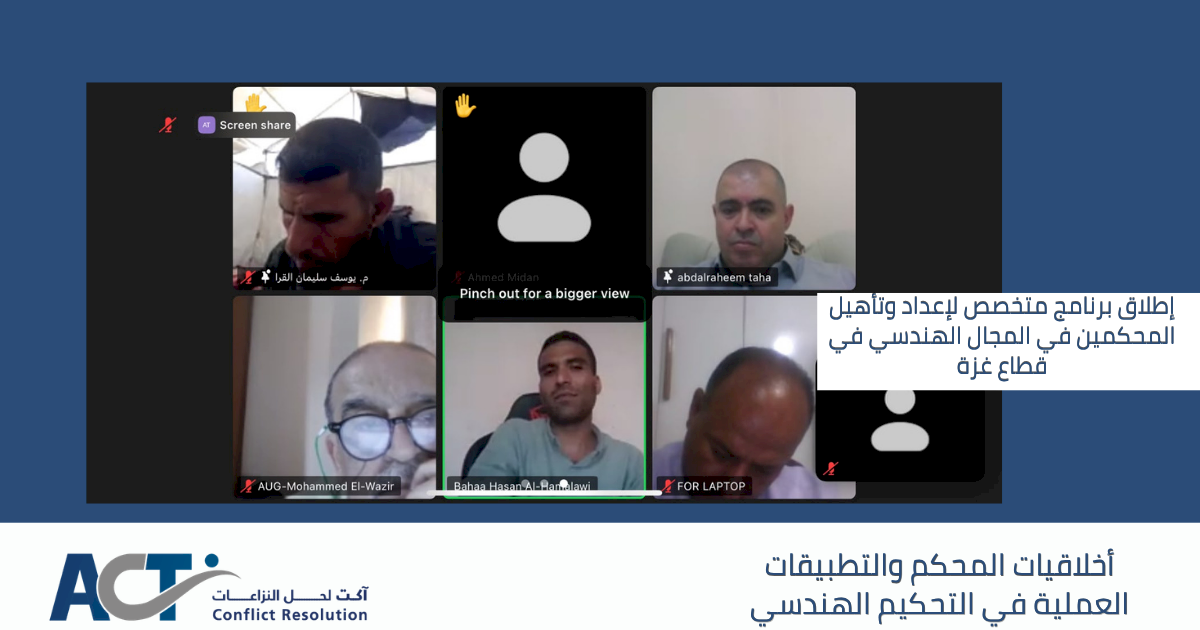
The program includes 20 training hours across 10 sessions, covering the legal and practical aspects of engineering arbitration. Topics include arbitration procedures, drafting decisions, arbitrator ethics, and practical applications. It targets engineers, lawyers, and contractors in Gaza.
This initiative comes within broader efforts to strengthen the culture of arbitration and alternative dispute resolution, and to build national capacities that can manage engineering disputes effectively — thereby supporting development and reconstruction efforts in the Gaza Strip.